

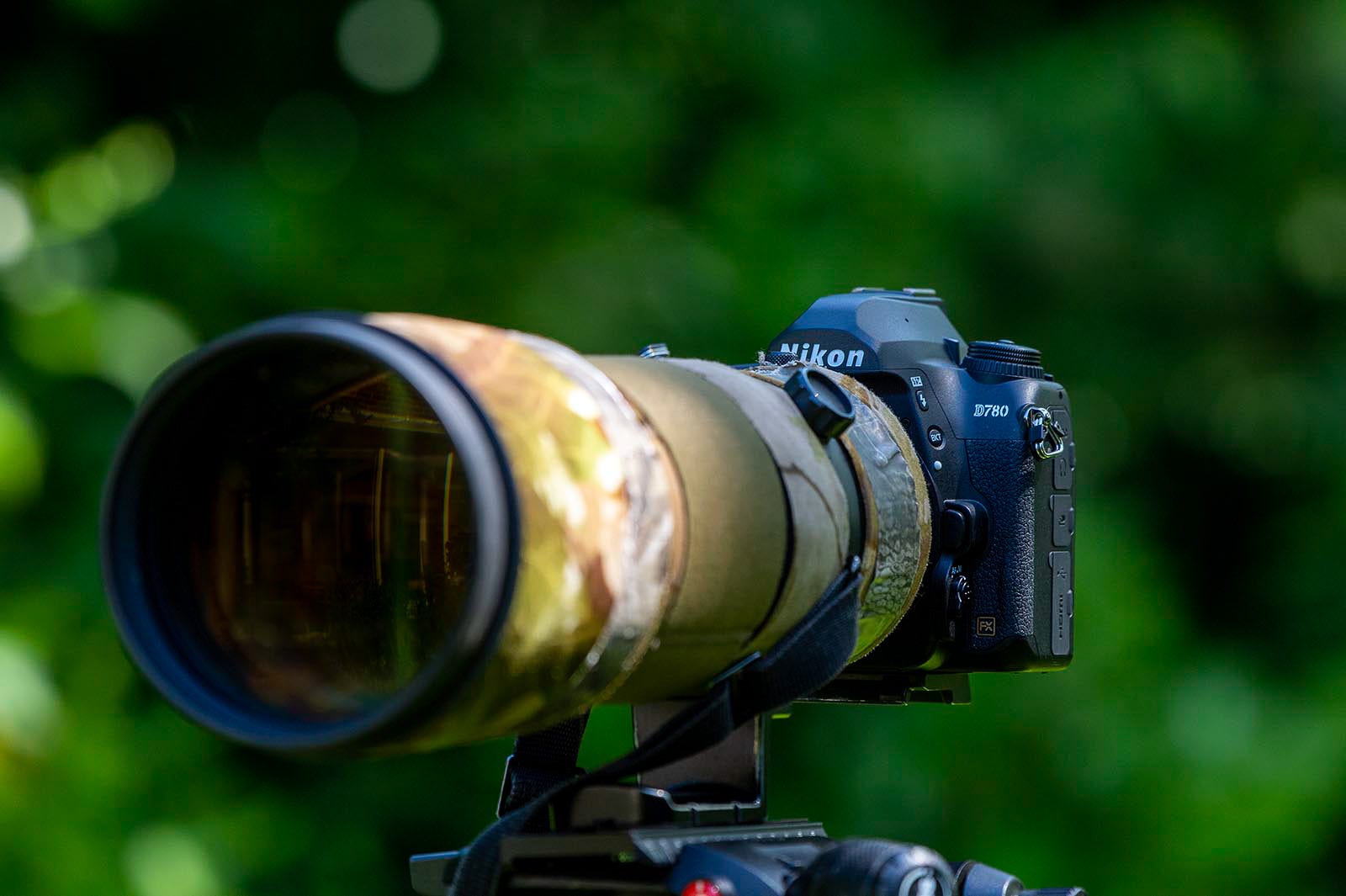
Picture a woman. She’s lying on her belly in on a frosty, cold morning. Frost still on the grass. Sunrise just starting to peak over the mountains behind her and in front of her. Her elbows are propped in the dirt. The telephoto lens on her camera is her favorite, but it’s heavy and she uses a short tripod to hold it steady. Twenty minutes pass. Then forty. An hour. And she waits. Just as the mist begins to clear a bull elk she’s been watching graze, suddenly lifts its majestic head, turns slightly toward her, and finally, she gently presses the shutter. The photograph is stunning. She never got within a hundred yards of her prey. She never touches the elk. He suspects she’s there, but chooses to ignore her and continue eating. She checks the screen, sees the shot, is more than satisfied with the raw image, and silently leaves.
The bull elk? He watches her walk away from her, unimpressed.
In Colorado there is now a piece of paper that says before she can sell that photograph, she has to buy a permit from the state and give the government a cut.
She didn’t take the elk. She took a photograph. And that’s the story I want you to hear.
What the petition actually says
This is a citizen petition, filed with the Colorado Parks and Wildlife Commission on July 23, 2026. It asks the Commission to create a new rule, or amend an existing one, and the existing one has a name I am not making up: 2 CCR 406-0-018, “Sale of Wildlife.”
The petition would create an annual Wildlife Photographer/Artist Permit. The proposed fees: $35 a year for a Colorado resident individual, $100 for a non-resident individual, and $250 for a commercial entity.
Who would need one of these permits? Anybody who sells a print or a digital file. Anybody who licenses an image to a magazine, an advertiser, or a stock platform. Anybody who sells wildlife artwork or merchandise. Anybody monetizing social media where wildlife imagery is their subject matter. Anybody with an Etsy page.
Now read the proposed rule slowly, because this is the part that defines the absurdity. The permit would reach “any wildlife or insect species” within CPW’s jurisdiction. A butterfly on a coneflower counts. And it would apply “regardless of where in Colorado” the wildlife was photographed or depicted, including your own backyard. Personal, non-commercial photography is exempt. Money is the trigger. The moment a picture of a wild animal or a butterfly earns you a dollar, you need the state’s permission.
This is not a conservation program. It’s another fee. It’s another barrier. It’s a tollbooth on your camera.
The public comment window closed on August 27. As of a September 7 update from the photographers pushing back, the petition had entered the Commission’s internal review process. It has not been voted up or down. The proposal is alive and well, as you would expect in this crazy state.
Who filed it, and why that matters
My first assumption was that this came from some animal-rights outfit that thinks a camera stresses deer. It didn’t. The petitioner is Patt Dorsey, and don’t think Patt Dorsey is a crank. I’m open to be persuaded otherwise.
Dorsey spent an entire career inside Colorado wildlife management. District wildlife manager in Boulder. Area wildlife manager in Durango. She ran the state’s hunter education program. She sat on the Director’s own staff as manager of the whole Southwest Region. In 2012 Colorado named her its Wildlife Officer of the Year. Today she runs conservation operations across nine Western states for the National Wild Turkey Federation, where part of her job is recruiting and keeping paying hunters. That last piece is not a knock. It’s context that tells you exactly which worldview this petition comes out of.
So this did not come from the fringe. It came from inside the profession, from someone who has given her working life to Colorado wildlife and believes, sincerely, that she is asking for fairness. That’s why it deserves a real answer and not a cheap one.
Her case, made as strong as I can make it
Here is the argument, and it is not stupid. Colorado’s wildlife is a public resource. It belongs to all of us. And for a hundred years, the people who paid to keep it healthy were hunters and anglers. They buy the licenses. They pay a federal excise tax on rifles, ammo and fishing tackle, the Pittman-Robertson and Dingell-Johnson money, and that revenue flows back into habitat, wildlife officers, and land. It is most of the conservation budget. It has been the deal for generations who understand wildlife, the great American outdoors, belongs to all of us.
Now here comes a wildlife photographer who sells a stunning image of a bull elk for real money, using the same public elk, and puts nothing back into the pot. Dorsey looks at that and says hey, chip in, like everybody else who profits off the public’s animals. $35. Or more. Just contribute your “fair share.” And she has a genuine problem behind her: hunting participation is falling, the user-pays model is running short of money, and nobody has replaced it. That worry is genuine so I will not ignore it.
That is the honest version of the other side. And this is why it’s wrong.
A camera is not a rifle
A hunter takes the animal. He removes it from the field. It is gone, and the next person cannot have it. That is a harvest, and the state can regulate a harvest and charge for it all day long. That is what a hunting license is, and it is entirely legitimate.
A photographer takes a picture. The elk is still standing there when she packs up her gear. The next person gets the same elk, the same sunrise, the same shot. Nothing left the field except a photograph. And a photograph is not a dead animal. A photograph is speech.
That is the error sitting at the heart of this petition. It treats a camera like a rifle and a picture like a carcass. Once you see it, you can’t unsee it. The state is not charging someone for taking wildlife. It is charging someone for taking a picture and telling a story about a wild animal. That is a different thing, and the Constitution treats it as a different thing.
While we’re here, the premise that photographers “pay nothing” is wrong. They pay the same state and federal taxes that hold up public land. They buy the park passes and access permits. Plenty of them buy the Habitat Stamp on purpose. The free rider the petition describes is a good deal smaller than advertised.
The First Amendment problem, in Cowboy English
I’ll say this as a recovering lawyer, and I’ll keep the law honest about what it does and does not settle.
The fee turns on what the picture is of. Same field, same morning, same camera. Photograph a red barn and sell the print, and Colorado has nothing to say to you. Turn ninety degrees, photograph an elk, sell that print, and now you owe the state a permit and need its permission. The only thing that changed is the subject of the photograph. That is the government pricing a photograph based on its content.
Content is exactly what the First Amendment is most suspicious of. When a government singles speech out for burden based on its subject matter, courts apply strict scrutiny, the hardest test in constitutional law to pass. That’s the teaching of Reed v. Town of Gilbert (2015). Selling the speech does not lower the protection: a photograph offered for sale is still protected expression. Courts have long been hostile to flat charges on the exercise of a First Amendment right. In Murdock v. Pennsylvania (1943), the Supreme Court struck down a license fee on distributing literature and said a state “may not impose a charge for the enjoyment of a right granted by the federal constitution.” And singling expression out for special taxation or licensing draws heightened scrutiny of its own, the lesson of Minneapolis Star & Tribune Co. v. Minnesota Commissioner of Revenue (1983) and Riley v. National Federation of the Blind (1988).
There is also another problem underneath the constitutional problem. CPW’s authority runs to wildlife, the live animal on the land. It does not run to images of wildlife on somebody’s wall. Power over the elk is not power over the photograph of the elk. The national photographers’ associations, ASMP and NANPA, made exactly these points in their filings: selling an image does not strip its constitutional protection, and authority over wildlife “does not give it open-ended authority over photographs.”
Before you lose your mind, let me state an honest caveat on the record. This is a petition, not a law. No court has ruled on any of it, because there is nothing yet to rule on. I am not telling you a judge has declared this unconstitutional. I am telling you that if CPW writes this into a rule, the state will have bought itself a lawsuit, and it is the kind of lawsuit governments lose.
The logic that eats everything
Follow their theory to its logical conclusion. You make money off a public resource, therefore you owe the state a fee. Where does it stop?
A landscape photographer makes a fortune off pictures of public mountains that every taxpayer owns. Fee. A wedding photographer poses the couple in a public park. Fee. And why stop at the photographer at all? Why not a special sales-tax “fee” on the camera itself the day you buy it, since someday you might point it at a deer? When an argument justifies everything, it isn’t really an argument. It’s a search for revenue looking for a place to land.
Which is the real question. Not whether one retired wildlife officer had a bad idea. People have bad ideas all the time. We’re inundated with bad ideas. The question is why a bad idea like this one gets a serious hearing in Colorado instead of getting laughed out of the room.
Why it happens here: the fee reflex
Because Colorado has taught itself to govern by fee. Once you see the habit, you see it everywhere.
In 1992 the voters passed TABOR, the Taxpayer’s Bill of Rights, with a simple promise: the legislature cannot raise your taxes without asking you first at the ballot box. So the people who wanted more of your money stopped calling it a tax. They call it a “fee” now, run through state-owned “enterprises” that TABOR exempts, and the vote you were promised never happens.
The scale of it is hard to believe until you see the number. The Common Sense Institute’s 2026 fee update found that fee-enterprise revenue reached $28.2 billion in fiscal year 2025, more than half of the entire state budget. That works out to about $4,692 for every resident of Colorado, up from $225 per resident in 2000. Fee revenue has grown roughly 3,700 percent since 1994, while population plus inflation grew 185%. The share of state spending that sits outside TABOR’s reach climbed from 46% in 1996 to 77% in 2025! Even after voters passed Proposition 117 in 2020 to require a vote on big new enterprises, the legislature created 10 new ones since, engineered to stay just under the threshold, none sent to voters first. (The Common Sense Institute leans free-market. The underlying figures come from the state’s own budget.)
When a government’s first instinct, every time it wants more of your money, is to invent a fee nobody has to vote on, a fee on cameras is not a wild outlier. It’s the next target for more revenue. Notice what Dorsey did and did not propose. She did not propose a tax on photographs. She proposed a fee. In Colorado, that is how you get in the door.
Why “it’ll never pass” is not a safe bet
In a lot of states a citizen petition is a suggestion box. In Colorado it’s a live wire, and here’s the proof.
This is the state that put wolves on the ground by a ballot measure, Proposition 114 in 2020, that passed on the strength of Front Range votes over the objection of the rural counties that would live with the animals. This is a state where the Governor appoints the Parks and Wildlife Commission, and where hunters will tell you flatly that the Commission has been stacked with people hostile to their interests. And this is the fact to lock onto: in March 2026, that Commission took a citizen petition to ban the commercial sale of native furbearer pelts and voted 6 to 4 to advance it into formal rulemaking, over the recommendation of CPW’s own Director to deny it. The agency’s top professional said no. The Commission said yes anyway.
Clearly a petition in Colorado does not have to be good. It does not have to be constitutional. It does not even have to survive the Director. It has to find a handful of votes on a Governor-appointed board. That is how low the bar is. Don’t assume this one dies on its own.
The pattern: make a cost, then bill a stranger
There’s one more habit underneath all of this, and it’s the thread that ties the wolves to the camera. When Colorado manufactures a cost, it goes looking for a new class of people to hand the bill to.
Voters ordered up the wolves. The bill came due on the ranches. The state set aside about $350,000 a year to compensate ranchers for the calves and sheep the wolves kill. In a single sitting in early 2025, the Commission approved roughly $340,000 in claims, nearly the entire annual fund at one single meeting, with more than $200,000 in additional claims still pending. One ranch operation alone was approved for $287,407. And much of that was not carcasses you could count. It was calves that came in lighter and cows that failed to breed, because you cannot run cattle with a wolf pack working the tree line and expect the herd to stay calm.
I’ll be straight about the beef in your grocery cart, because you’ll hear wolves blamed for that too. Beef is expensive right now mostly because the national cattle herd is the smallest it has been in generations, and that is drought, not Colorado wolves. Don’t oversell it. But the wolf program’s own cost is real, is blowing through its budget, and it lands on people who never got a vote. That’s the pattern in Colorado. The state creates a cost, then hunts for someone new to charge. Today the someone new is anybody with a camera and a print to sell.
The honest fix
Is conservation short of money? Yes. That part of Dorsey’s worry is legitimate, and it deserves a legitimate answer. Fewer people hunt every year, and the user-pays model she has spent her career inside is running low.
You fix a money problem with money policy. If the state wants more people funding wildlife, there are honest ways to do it that don’t put a tollbooth on the Bill of Rights. Broad-based funding, the kind Congress keeps nearly passing in the Recovering America’s Wildlife Act and never quite delivering. A voluntary check-off on a tax return or a license renewal. A line in the general fund, argued out in the open where taxpayers can watch it happen and throw the bums out if they hate it. Any of those is a fight worth having, and I might even help make the case. What you do not do is skip past every one of them and grab the single instrument the Constitution flags first. You do not solve a funding shortfall by licensing a photograph.
What to do about it
The Commission has not voted on this petition. That means your voice can still reach the commissioners, which is not always true in our state government.
Watch the Parks and Wildlife Commission’s agenda for when this petition comes up for a decision. The Commission meets roughly every two months, and its agendas and contact information are posted on the CPW website. When it is noticed for a vote, tell the Commissioners no, in plain, cowboy English. In your own words. Tell them a camera is not a rifle, a picture is not a harvest, and the state has no business pricing a photograph by what’s in it. Tell them, if conservation needs money, to bring you an honest funding proposal citizens can debate and vote on.
It’s still your elk. It’s still your photograph. And it’s still, for now, your First Amendment.
Sourcing and Verification
The petition. The Citizen Petition Form, dated July 23, 2026, filed with the CPW Commission, proposes to create a rule or amend 2 CCR 406-0-018 (”Sale of Wildlife”) to establish an annual Wildlife Photographer/Artist Permit covering the commercial sale, licensing, or distribution of photographic and artistic depictions of Colorado wildlife, reaching “any wildlife or insect species” within CPW’s jurisdiction “regardless of where in Colorado” it was photographed or depicted. Petitioner: Patt Dorsey. Fee tiers ($35 resident individual / $100 non-resident individual / $250 commercial entity), the commercial scope (prints, licensing, stock, art, merchandise, monetized social media, Etsy), the personal-use exemption, and the August 27 comment deadline are reported by ASMP (Colorado chapter) and by PetaPixel (August 6, 2026). The September 7 status (”in the Commission’s internal review process”) is from NANPA’s September 12, 2026 update.
Patt Dorsey’s background. Roles at Colorado Parks and Wildlife / Division of Wildlife (Boulder district wildlife manager, Hunter Education Administrator, area wildlife manager in Durango, Southwest Region Manager on the Director’s staff), the 2012 Colorado Shikar Safari Wildlife Officer of the Year award, and her current position as Director of Conservation Operations (Western Wildlands / Mountain West) at the National Wild Turkey Federation come from her Conservation Leaders for Tomorrow biography and her professional listing. The Shikar Safari honor is a wildlife-officer-of-the-year award and nothing more; I am not connecting it to any hunting-lobby organization.
The First Amendment analysis is my own, built on established doctrine, not a prediction about this specific petition, on which no court has ruled: Reed v. Town of Gilbert (2015) on content-based restrictions and strict scrutiny; Murdock v. Pennsylvania (1943) on charges for exercising a constitutional right; Minneapolis Star & Tribune Co. v. Minnesota Commissioner of Revenue (1983) and Riley v. National Federation of the Blind (1988) on singling out and licensing expression. The parallel points that selling an image does not strip its protection and that authority over wildlife is not authority over photographs are drawn from the ASMP and NANPA filings.
The citizen-petition process. That CPW citizen petitions move through a staff/Director recommendation and a Commission vote to deny or advance to rulemaking is documented in CPW’s own materials. The furbearer fur-sale-ban petition’s 6-4 advance into rulemaking on March 4, 2026, over the Director’s recommendation to deny, is reported by the Sportsmen’s Alliance. The Governor’s appointment of the Commission is a matter of state law; the “stacked” characterization is what hunting groups say, reported previously by the Colorado Sun, and I present it as their charge, not as established fact.
The government-by-fee figures ($28.2 billion in FY25; roughly $4,692 per resident, up from $225 in 2000; fee growth of about 3,700 percent since 1994 against 185 percent for population plus inflation; TABOR-exempt spending rising from 46 percent in 1996 to 77 percent in 2025; ten new enterprises since Proposition 117) are from the Common Sense Institute’s “Snapshot of Fees in Colorado: 2026 Update.” The Institute is a free-market organization; the underlying numbers are the state’s own budget figures.
The wolf figures (an annual depredation fund near $350,000; roughly $340,000 approved in a single early-2025 round with more than $200,000 pending; a single operation approved for $287,407, including losses from reduced calf birth weights and reduced conception) are from contemporaneous reporting by Field & Stream and CBS Colorado. Proposition 114 (2020) is the voter mandate for reintroduction; releases began in December 2023, with a second round in January 2025.
Two things I am deliberately NOT claiming. First, that Colorado wolves are why beef is expensive: national beef prices are driven mainly by a historically small cattle herd from drought, not by Colorado’s wolves. Second, that this permit is already law: it is a petition in Commission review, and it may yet be denied. The alarm here is about the mechanism and the direction, not a done deal.
One item to confirm. The date of the Commission meeting at which this petition will be decided was not set as of publication. The Commission meets roughly every two months; check the CPW Commission agenda for the current schedule rather than relying on a date from me.
I agree that conservation is running short on funds, and would like to see them be better funded. Why is their funding low? Because they abuse the very people who pay the most - the hunters and anglers. Not only do those fees increase by unreasonable amounts on a regular basis, hunters/anglers pay a special tax on the equipment used for their recreation. To top it off they are treated like rapists, instead of the true conservationists they are. That is why fewer people hunt/fish than used to - the cost and public demonization. Some states have started adding a tax to camping equipment to help fund conservation. Regardless of where you use the tent, your backyard or a state campground you pay the tax.
Taking the photography tax (I'm sorry, "fee") to the next level, like hunting equipment, the next step will be to tax the camera, memory card, lens, tripod, everything. Hunting equipment, fishing gear, camping gear, photography gear all taxed plus outlandish fees will leave those activities to only those who can afford it. Add in the state fees to camp, park, etc. on public land and the public won't be able to afford using their own land.
If we don't find a way to stop it the end result may be a fee on air, once the communists decide they own that as well.
So, many things are wrong with this (many of which you cover), but add to it the irony that Colorado often brags about being a state friendly to artists. This is a direct attack on those artists who already remit sales tax and pay income and self-employment taxes from the sales of their work (not that paying taxes or not is a reason to add more taxes or assault the First Amendment).