

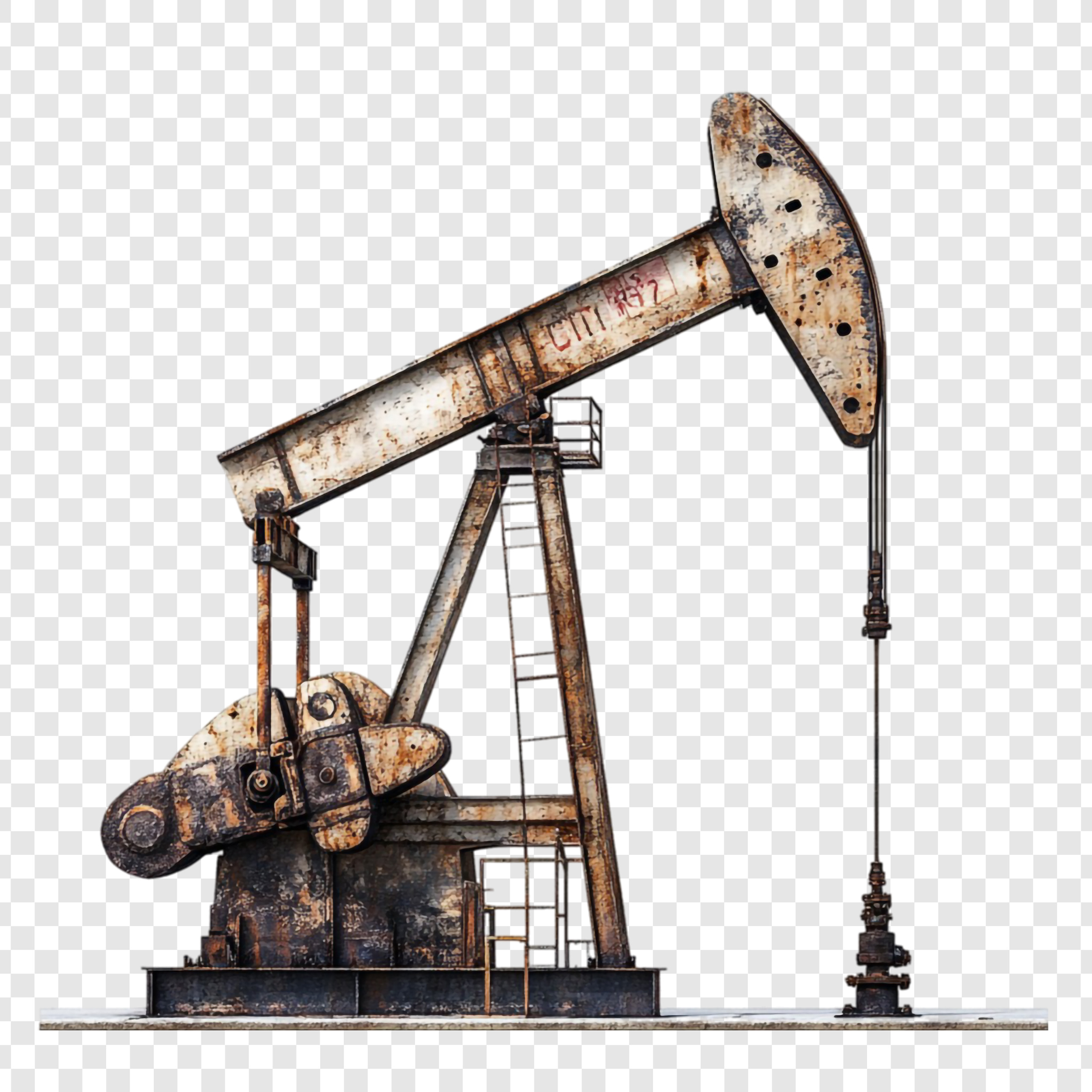
Here we go again. The oil companies posted their second-quarter earnings on Friday, and right on cue, the same politicians who spent the spring lecturing us about the war in Iran are now lecturing us about the price of gasoline. Chevron: $12 billion. ExxonMobil: $14.5 billion, more than double last year. Shell, the day before, came in at nearly $10 billion. And Hakeem Jeffries, Sheldon Whitehouse, and Jim McGovern all reached for the same script they have been reading for decades. Record profits. Corporate greed. Price gouging. Hold the crooks accountable.
Many people do not understand how oil actually gets from a well in the Persian Gulf to the pump in your neighborhood filling station. You can be talked into a lot of very bad policy by people who are counting on you not to understand it. And, as we will see later, those people are not all on the left.
How oil actually gets priced
Start with the price on the sign at your local gas station. Gasoline is running about $4.00 a gallon nationally. A year ago it was $3.14. What changed? The Strait of Hormuz. About 20% of the world’s crude oil moves through a stretch of water twenty-one miles wide at its narrowest point, and since Iranian forces started attacking tankers back in March, traffic through that strait has fallen from around a 130 ships a day to fewer than 10 on some days. Brent crude, which was in the range of $70/barrel before the shooting started, spiked north of a $110 a barrel in March. It came back down after the June memorandum of understanding, then jumped again in July when the ceasefire collapsed and the shooting started up all over again.
That is not price gouging. That is a supply shock. And it does not matter whether the oil in question is pumped in Saudi Arabia, Norway, or the Bakken formation in North Dakota. Crude oil is a globally priced, fungible commodity.
Let me explain what that actually means, because it is the basis of everything else.
A barrel of West Texas Intermediate (WTI) is not identical to a barrel of Brent, which is not identical to a barrel of Arab Light. They differ in sulfur content, in density, in trace impurities. But they are close enough substitutes that they trade against each other constantly, and any gap between their prices (bigger than the cost of shipping and quality adjustment) gets arbitraged away almost instantly. In practice, this means every producer in the world faces roughly the same price, adjusted for grade. An ExxonMobil well in the Permian Basin does not care that it sits in Texas. It sells at the world price minus a small transport differential. That is how commodity markets have worked since there have been commodity markets.
So when the Strait of Hormuz shuts down and Brent goes to $110, the American producer sees his revenue per barrel jump too, not because he did anything different, and not because he colluded with anyone, but because he is selling into the same global pool that just got smaller. His margins expand. His profits climb. He reports a great quarter.
The bad answer from the left
Now here is where the Democrats’ argument sounds compelling for about ten seconds. They say, look, the war raised the price, and the oil companies did not do anything to earn that extra money. They just collected it. So it is a windfall. Tax it! Do a windfall profits tax! Sheldon Whitehouse has a bill to take 50% of what he calls “excess profits,” and he says he is being generous because the companies get to keep half.
Let’s look at their argument, because a close inspection reveals its faults. When crude spikes because of a war, a company that already has wells producing at a fixed cost of, say, $30/barrel is suddenly selling that same barrel for $80 or even $90 a barrel. The margin expands dramatically without any new investment, new risk, or new work. That is the definition of a windfall. And in a raw moral sense, maybe you can see why a lawmaker looks at that and says, why should the shareholders keep all of it while my constituents cannot afford to fill up the tank? Of course I always wonder, where does that “windfall tax revenue” go that actually helps their constituents, but that’s another article for another time.
Here is why their argument dies when it meets the real world. The United Kingdom ran exactly this experiment. In May of 2022, after the invasion of Ukraine spiked oil prices, London imposed a windfall tax on North Sea producers. It started at 25%. It is now 38%, on top of the ordinary corporate taxes already imposed, for a combined effective rate of 78%. Seventy-eight pence of every profitable pound handed to the UK Treasury.
The results are not in dispute. Offshore Energies UK, the industry trade group, projects that capital investment in the North Sea will fall from about £14 billion to about £2.3 billion between 2025 and 2029. That is an 80% collapse! Harbour Energy, the largest producer in the basin, saw its 2022 profits, in its own words, all but wiped out by the levy and announced it was cutting jobs and looking overseas. British oil and gas production has now dropped 40% in five years and is projected to drop another 50% by 2030. The UK is on track to import 80% of its oil and gas by the end of the decade. The tax revenue the levy was supposed to generate? Falling toward essentially zero by 2030, because you cannot tax profits that no longer exist.
That is the world U.S. Senator Sheldon Whitehouse wants to import. Less domestic production, less domestic investment, more dependence on imports from places like Venezuela and the Persian Gulf, and higher gas prices the next time somebody in Tehran decides to close the strait. He is proposing to solve a supply shock by cutting supply.
The bad answer from the right
A week ago, I would have ended this essay right there. Then I got a note from a listener, a lawyer named Bradford Yules, who reads carefully and writes in all capital letters, and who took issue with the on-air version from an entirely different direction. His argument, boiled down, was this: America First. If the United States is energy independent, there is no justification for shipping our oil to any other country. Doing so hurts Americans. It is almost as indefensible, he said, as depending on foreign countries for our national defense.
I want to take that seriously, because a lot of people feel that way even if they never write the email. The intuition is understandable. We sit on enormous resources. We are producing more oil than any country on the planet. And yet ordinary Americans are paying $4.00/gallon while tankers full of American crude sail to buyers in Rotterdam and Yokohama. It looks like our own abundance is being auctioned away while our own citizens go without.
The problem is that the intuition treats a national economy like a household pantry. If we have flour on the shelf, we do not sell it to the neighbors while our own kids go hungry. That instinct is not stupid. It is just wrong about how commodity markets work. And we know it is wrong because we actually ran this experiment before.
From 1975, after the OPEC embargo, until December of 2015, the United States banned the export of domestic crude oil. Forty years. Whatever we produced, we kept. It was America First energy policy in its purest legislative form.
What happened during those forty years? Domestic production declined from about 9.6 million barrels a day in 1970 to a low near 5 million in 2008. American light sweet crude traded at a persistent discount to Brent, sometimes as much as $20/barrel below the world price. Why? Because with no export outlet, the marginal barrel had nowhere to go, and that pushed down the price American producers could get. Producers earned less. Investment lagged. Wells that would have been drilled did not get drilled.
Then Congress lifted the ban in December of 2015. Within just four years the United States passed Saudi Arabia and Russia to become the largest crude producer on the planet. That is not a coincidence. That is what happens when producers can sell into a market that is willing to pay the world price.
Now, imagine we did what Bradford is proposing and slammed the door on exports today. The Rotterdam bid disappears. Exxon can only sell to American refiners. American refiners now enjoy a captive supplier, so the domestic price of crude falls. Let’s say it falls from $90/barrel to $70/barrel. Great, right? Cheaper crude, cheaper gasoline?
No.
Two things happen almost immediately. First, Exxon looks at $70/barrel crude in a world where their fully loaded cost of production is $60/barrel, and they cancel the marginal projects. The rigs that were about to spud new wells in the Delaware Basin get stacked. Production drops. Second, the domestic gasoline market still reflects the world price of refined product, because gasoline itself is traded internationally. American producers earn less, produce less, and hire fewer people. American consumers do not see a proportionate drop at the pump. You paid for the export ban with your own future supply.
There is one more fact almost nobody outside the industry knows, and it demolishes the export-ban idea on purely engineering grounds. American refineries were mostly built decades ago for heavier, sourer crude. Why? Because that is the oil we previously imported from Venezuela, Mexico, and the Middle East. But the American shale boom produces mostly light sweet crude. If we banned exports and forced all that light sweet into American refineries, a lot of it would not have anywhere to go, because the refineries are optimized for a different feedstock. Meanwhile we would still need to import Canadian heavy for the Gulf Coast, because you cannot instantly rebuild a refining complex to run on a different grade of oil. Bradford’s plan would strand the very oil he thinks he is protecting.
A note for a lawyer, since he brought it up
One more thought for Bradford, since he raised the professional flag. In the United States, subsurface mineral rights are property. They belong to whoever owns them: usually the surface landowner on private land, the federal or state government on public land, the tribe on tribal land. A barrel of oil is produced under a lease with the mineral rights holder, and the company that lifts it owns it. Congress can regulate the sale, and did for forty years, but the oil is not a collective national possession the way Bradford’s argument assumes. A statute that says you may produce this but you may only sell it to a domestic buyer at whatever price the domestic buyer offers is functionally a partial taking of a private property interest, and any lawyer ought to see the Fifth Amendment question staring right back at him.
Two bad answers. One honest answer.
Senator Whitehouse, on the left, wants to solve high gasoline prices by taxing away the profits that make new production worth the risk. Bradford Yules, on the right, wants to solve them by cutting off the export market that makes new production worth the risk. Both proposals reduce the future supply of oil. Both proposals, dressed in very different language, arrive at the same destination: less American production, less American investment, less American leverage in the global market, and higher American gasoline prices the next time somebody in the Persian Gulf gets frisky.
The honest answer is that gasoline is expensive right now because a war is disrupting the flow of oil through the most important shipping lane on the planet. American oil companies did not start that war. They did not choose those prices. They are, like every farmer selling wheat and every miner selling copper, taking the price the world market gives them. Their profits are real, and the numbers are large, but the numbers are large because oil is priced in dollars per barrel and they sell an enormous number of barrels. Their margins are not historically extraordinary. Their cash reserves reflect an entirely rational fear of the politicians, in both parties, now demanding they be punished for having a good quarter.
If you want cheap gasoline, you want more production, not less. You want a bigger global market for American oil, not a smaller one. You want stable rules, not confiscatory ones on the left or protectionist ones on the right. You want to look at the United Kingdom and learn one lesson, look at the 1975 to 2015 export ban and learn the other, and stop trying to relearn either the hard way.
And when a member of Congress, or a well-meaning listener, tells you the way to fix a supply shortage is to shrink the supply, you might reasonably ask whether he has any idea what he is talking about, or whether he is just counting on you not to.
Wow Mike. Very well explained. Your intellect is a blessing to us all, if only we had the courage to implement the plan and the commitment to not interfere in the economic process. You need to be in Trumps inner cabinet. Blessings to your family.
Thanks for the great informative and understandable explanation. I have always understood some of the reasons gas prices fluctuate, but you easily explained it in greater detail.