

There is a word for what a person does when they knowingly destroy the thing that keeps them alive. We don’t usually apply it to governments. After watching California burn down a second refinery in six months, I think it’s time we did.
Let me be precise about what I mean, because this is not hyperbole and I’m not interested in cheap outrage. I mean that the state of California is methodically dismantling the infrastructure that fuels its own economy, its own airports, and the military bases that defend the West Coast of the United States — and it is doing so on purpose, with full knowledge of the consequences, in service of a green-energy fantasy pushed by the gospel of the Church of the Climate Activists that even their own congregants are now quietly trying to walk back. That is not policy. That is self-destruction with a press office.
Here is how I know.
The facts, undisputed
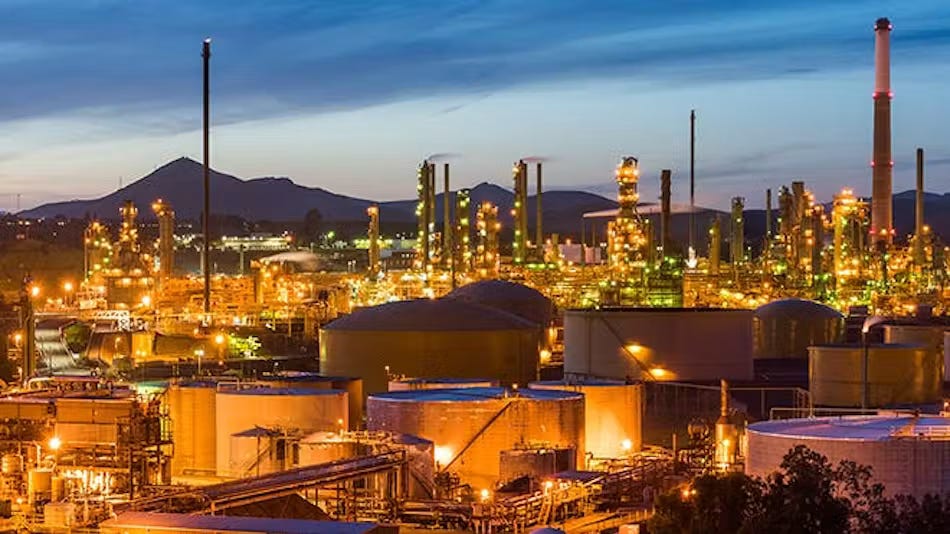
A few weeks ago, Valero shut down its Benicia refinery, pictured above. One hundred forty-five thousand barrels a day of refining capacity, gone. And it didn’t go quietly into that good night the way the company first promised. Valero cancelled its crude oil contracts and pulled the plug roughly four months ahead of schedule. That is not a company easing toward a graceful exit. That is a company sprinting for the door.
This is the second major refinery California has lost in about six months. Phillips 66 closed its Los Angeles refinery last October. Put the two together, and California has deleted around 17 percent of its in-state refining capacity in under a year.
The U.S. Department of Energy frames the longer arc even more starkly: the number of operating refineries in California has collapsed from 23 in 2000 to roughly a dozen today, heading toward eleven. In the most populous state in the union — the fourth-largest economy on the planet — the machines that turn crude into gasoline and jet fuel are being switched off one by one.
California has deleted roughly 17 percent of its refining capacity in under a year — on purpose.
“It’s just the market,” they’ll tell you
Now, the state has a story ready for you, and I want to give that story its best possible day in court before I take it apart. Because that’s how you actually persuade someone — you don’t strawman the other side, you steelman it, and then you dismantle it.
Here is their strongest case. California gasoline demand is genuinely declining, because the state is phasing out the sale of gas-powered cars by 2035. These are aging refineries serving a shrinking customer base. The oil companies are just reading the room and making a rational business decision. As one environmental advocate put it, this is all about their profit margin, their bottom line.
Fine. That’s the argument. Now watch how quickly it falls apart.
Because look at what actually drove these companies out. Valero absorbed an $82 million fine from California’s air regulators, then took a $1.1 billion write-down on the value of its California refineries. In the company’s own words, California’s regulatory and enforcement environment is the most stringent and difficult in North America. Not in the country — in North America.
And Phillips 66? It announced its closure two days after Governor Newsom signed a bill handing the state even more power to regulate refineries. Two days.
That is not a coincidence. That is a confession in the confessional of their church.
You don’t get to be surprised
So let me lay out the theory of the case, as plainly as I can make it.
You cannot spend a decade deliberately strangling an industry — legislating away its customers, imposing the most expensive compliance regime in North America, levying record-breaking fines, mandating government-dictated fuel stockpiles — and then stand at a podium and act shocked when that industry packs up and leaves.
That is not a market failure. That is the policy working exactly as designed. You built the cage. You don’t get to act astonished when the animal walks out the door you left open. The “greedy oil company” story only holds together if you squeeze your eyes shut to the fact that California pulled every lever it had to make refining unprofitable — and then expressed shock when refining became unprofitable.
And here’s how you know they knew all along: they’re quietly trying to undo it. Even Democrats in Sacramento are now floating proposals to fast-track drilling permits and pause the very refinery profit cap they once bragged about passing — anything to keep the fuel flowing. When the people who built the machine start frantically throwing it into reverse, that, ladies and gentlemen, is consciousness of guilt.
The part that should frighten you
Everything up to this point has been about gas prices and politics. Set all of it aside, because there is a larger argument here, and it does not care which party you belong to. It is about whether this country can defend itself.
California is an energy island, and I mean that almost literally. There are no meaningful pipelines carrying refined fuel over the Sierra Nevada. So when California loses refining capacity, it cannot simply truck the shortfall in from Texas. The federal Energy Information Administration says so plainly: the West Coast cannot easily access fuel supply from the rest of the country.
So where do the replacement barrels come from? Overseas. From Asia. From refineries in India and South Korea — among the only foreign refineries that can even produce California’s unique gasoline blend. We are now importing the fuel that keeps California moving across the Pacific Ocean.
Now connect the last wire, because this is the one that matters most. Travis Air Force Base. Naval Air Weapons Station China Lake. Lemoore. Miramar. By the Department of Energy’s own accounting, more than 30 U.S. military installationssit inside this fuel ecosystem. These bases have historically run on jet fuel from California refineries an hour’s drive away. Take those refineries offline, and the fuel for American military aviation on the West Coast now has to arrive by tanker — from India, from South Korea.
Think hard about what we just did. We took a domestic strength — fuel made here, on our own soil, beside our own bases — and converted it into a foreign dependency. And not just any dependency: one that runs through the most contested shipping lanes on Earth.
We took fuel made beside our own military bases and made it depend on tankers crossing the most contested waters on the planet.
A blockade. A shipping-insurance crisis. A confrontation over Taiwan. Any one of those now degrades the fuel supply to American forces on the West Coast without an adversary firing a single shot at U.S. soil. That is the textbook definition of a self-inflicted strategic vulnerability.
And the fragility runs deeper still. The handful of remaining refineries are old. We are talking about a 56-year-old furnace stack that separated and crashed to the ground because it had never been inspected — it couldn’t physically be reached to inspect it. A thin spot on a furnace tube at another plant. A contractor opening the wrong valve at a third. With redundancy this thin, it no longer takes a policy decision to bring the West Coast to its knees. It takes metal fatigue. One fire. One old pipe. And the whole system — civilian and military alike — wobbles.
The honest caveat
I’m going to give you one honest caveat, because I won’t insult your intelligence by pretending the other side has nothing.
There are serious analysts, including economists at Stanford, who argue the hit to the price at your pump may be smaller than the doomsayers claim. Their reasoning is that California was already buying its marginal barrel of fuel from imports anyway, so losing a domestic refinery shifts more volume offshore without necessarily spiking the sticker price at the station.
I’ll grant them that. But notice what the argument quietly concedes: that we were already dependent on imports — and now we are about to be a great deal more dependent. The pump price was never the real story. The real story is resilience: whether the fuel keeps flowing when something on the far side of the world goes wrong. And on that question, every closure makes us weaker. There is not an analyst alive who can argue with a straight face that losing domestic refining capacity makes you more secure.
The conclusion
So why do we keep doing this to ourselves? Here is the uncomfortable answer: we aren’t doing it to ourselves by accident. A government in Sacramento decided, deliberately, that these refineries should die. It wrote the plan. Refinery closure isn’t a bug in that plan — it’s the goal. The only thing the planners neglected was a plan for what comes after: for the fuel, for the bases, for the slice of the entire West Coast’s refining capacity they just set on fire.
The evidence is in. They knew the refineries would leave — they engineered it. They knew the fuel would have to come from overseas — their own federal data said so. They knew the military runs on this fuel — the bases are right there on the map. They did it anyway. And now they are quietly trying to reverse the very policies they campaigned on, hoping you won’t notice.
Here is the cruelest irony of all. While Sacramento lights the match, Washington is running for the extinguisher. The federal government has moved to restart California oil production through the Santa Ynez unit specifically to blunt the supply risk the state created. Read that again. We have reached the point where the federal government is actively working to undo the damage a state government is inflicting on its own people.
That is not energy policy. That is energy surrender — dressed up as virtue, marketed to you as progress. California went from energy dominance to energy dependence, did it on purpose, and called it leadership.
If a foreign enemy had shut down a fifth of our West Coast refining capacity and forced our military to import jet fuel from across the Pacific, we would call it an act of war. California did it to itself and called it a climate plan.
Take this article to the next person who tells you this was just the market at work — look them in the eye, walk them through the evidence, and let them try to explain away the smoking gun.
No words. The idiotocracy of CA.
Steve Hilton is their only potential savior…..but unfortunately very slim odds. Time for Hegseth to step in to protect our military resources